May 16, 2026Goodness Care Team4 min read

Vaginal Moisturizer vs. Lubricant: What's the Difference, and Which Do You Need?

If you've ever stood in a pharmacy aisle holding two similar-looking tubes and wondered what the actual difference is, you're not alone. "Moisturizer" and "lubricant" get used as if they mean the same thing. They don't — and picking the wrong one is the most common reason women feel like nothing is helping.

The short version: a lubricant solves a problem in the moment. A moisturizer works on the underlying dryness over time. Understanding which job you're trying to do makes the choice obvious.

What a lubricant does

A personal lubricant is designed for a single moment: it reduces friction during intimacy. You apply it right before, it does its job, and that's the end of its role. It doesn't change anything about the tissue itself — it sits on the surface and makes things glide more comfortably for an hour or so.

Lubricants are genuinely useful. If your only concern is occasional friction during sex, a good lubricant may be all you need. But here's the limitation women run into: if the underlying tissue is dry, irritated, or thinning, a lubricant masks that for the duration of intercourse and then the dryness, itching, or soreness returns the rest of the day. You're treating a symptom at the exact moment it's most visible, and ignoring it the other twenty-three hours.

What a moisturizer does

A vaginal moisturizer works on a different timescale. Instead of coating the surface for one moment, it's used on a regular schedule — typically every couple of days, independent of whether you're having sex — to help the tissue hold onto moisture over time.

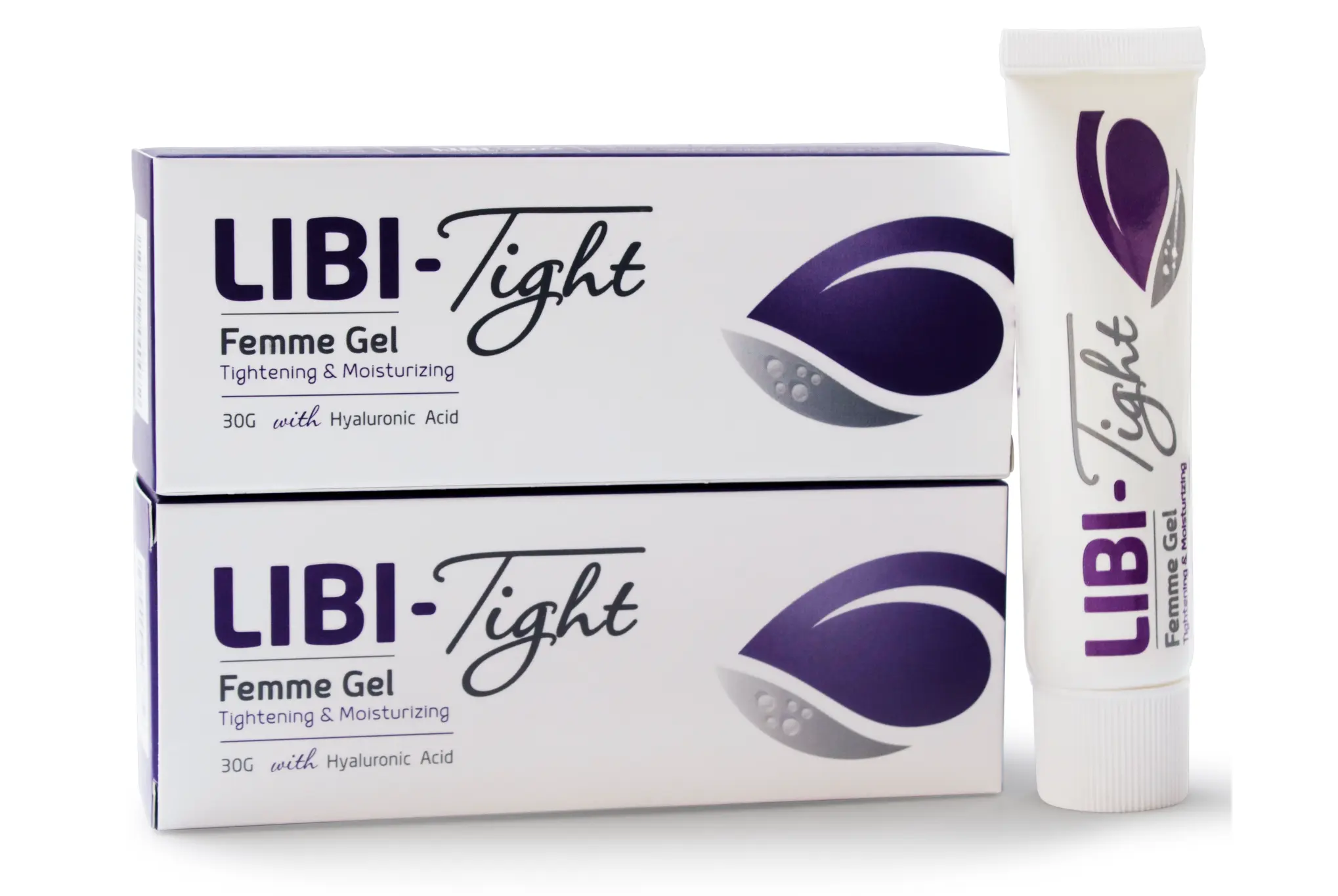
This is the category LibiTight belongs to. It's built around hyaluronic acid, a molecule your body already produces, which is remarkable for how much water it holds relative to its size. Applied regularly, it helps replenish moisture in the tissue itself rather than just lubricating the surface for a moment. Allantoin helps the tissue hold that moisture, and chamomile helps calm the irritation that chronic dryness tends to cause.

The practical difference: a moisturizer is working on the everyday dryness — the itching while you're sitting at your desk, the rawness when you walk, the discomfort that has nothing to do with intimacy. That's the part a lubricant was never designed to fix.

Why some women need both

These two aren't rivals — they work on different problems, so using both is common and sensible. A woman going through menopause might use a moisturizer regularly to address ongoing dryness, and still reach for a lubricant before intimacy on a particular day. One is maintenance; the other is for the moment. Neither replaces the other.

What matters is not mistaking one for the other. If you've been using only a lubricant and wondering why the daily dryness never improves, the answer may simply be that you've been using the moment-of product for an all-day problem.

A note on what's in the tube

When you're choosing a moisturizer, two things are worth checking. The first is whether it's hormone-free — many women either can't use hormonal products or would rather not, and a non-hormonal moisturizer sidesteps that question entirely. The second is pH. Healthy vaginal tissue sits in a mildly acidic range, and a product formulated to respect that range is gentler on the delicate balance of the area. LibiTight is water-based, hormone-free, and formulated within that mildly acidic range.

When to talk to someone

Most everyday dryness responds well to a non-hormonal moisturizer used consistently. But if you have persistent pain, unusual discharge, bleeding, or symptoms that don't improve after a few weeks of consistent care, that's worth a conversation with your gynecologist or pharmacist — not because dryness is dangerous, but because the right starting point depends on what's actually causing it.

If you're trying to figure out whether a moisturizer fits what you're experiencing, our guide on vaginal dryness walks through the common situations in more detail, and you can always ask our team directly.


This article is for educational purposes only and is not a substitute for medical advice. Consult your healthcare provider for guidance specific to you.

Related articles